The Decades and Deadlines website was created by a group of students from North Carolina Agricultural and Technical State University. These students are in various concentrations of Journalism and Mass Communications majors and have aspirations of careers in the media. The website was created to inform individuals of media events that took place in during the years of 1910-1920. |
||||||
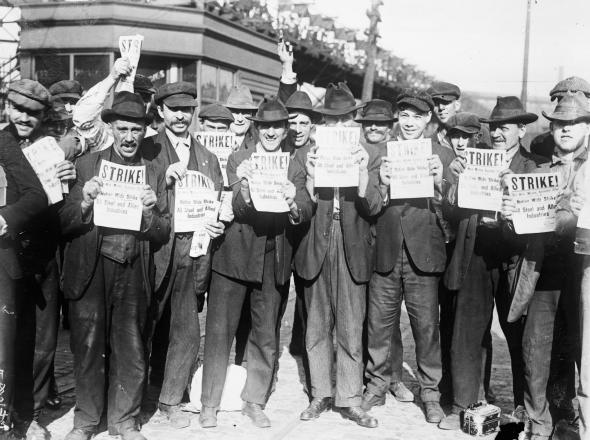
Media Events taking place during 1916-1918 BLACK PRESS: The first issue of Freedom's Journal marked the beginning of black press in America. During the first decade of the twentieth century, black newspapers only appealed to the small percentage of the black elite, educated and sympathetic whites. The Chicago Defender: Mass Migrations of Blacks 1916-1918 The Chicago Defender is renowned in black press. During the time period of 1916-1918 the Defender used their collumns and articles to persuade blacks to abandon the south and migrate north. The north was considered to be known as the "land of promise." Prior to World War I, majority of blacks occupied most of the south. During the periods between 1916-1918 approximately half-million blacks moved from the south and up to the north. This great migration was a very significant part of black history and was covered througout the papers of the Defender. This great migration was brought on by several issues. One issue was the boll weevil which damaged crops and left many blacks unemployed and other issues stemmed from Jim Crow laws. Lynchings were a part of everyday life in the south for blacks. Through the use of their newspaper, the Defender strongly encouraged blacks to migrate north for a shot at a better life. 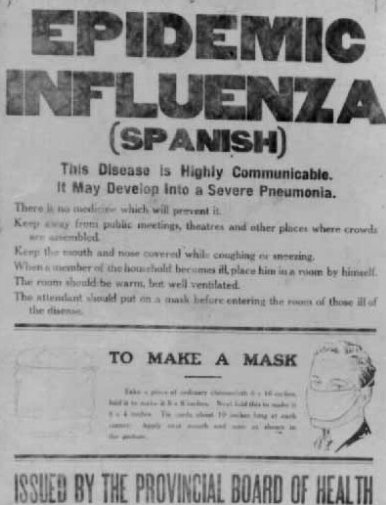 INFLUENZA PANDEMIC: A great event that was covered in mass media in 1918 was the Influenza pandemic. This was one of the nations devastating epidemics in recorded world history. This epidemic killed five hundred thousand Americans and all in all 20-40 million people were killed.  CTION OF PELERESIDENT WOODROW WILSON: 1916 PartyRepublican PartyWilson, WoodrowWorld War I In the Presidential Election of 1916, President Woodrow Wilson narrowly won reelection. Wilson was the Democratic candidate, while Charles Evan Hughes ran on the Republican tickElection of 1916, President Woodrow Wilson narrowly won reelection.The one major issue that remained into November 1916 was whether the United States could maintain its policy of neutrality toward Europe. Wilson’s pledge to stay neutral was extremely popular among Americans and his pledge to help create an aid organization in Europe following the war (the larvae for the League of Nations) was endearing to progressives. Despite these questions, the Democrats renominated the Wilson-Marshall ticket with much acclaim at their nominating convention and looked forward to facing a reconstituted Republican Party in 1916. Media Events 1918-1920 New York Times- One event that took medias attention was the The Great Steel Strike of 1919. It is suggested that many newspapers contributed to the downfall of the steel strike. With New York City being the "capital of newspapers" for its 18 daily newspapers the steel strike was overly covered and lend to some 350,000 steel workers nationwide to strike against the United States Steel Corporation.
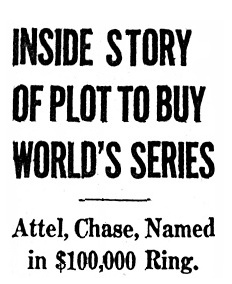
 1919- "Black" Sock Scandal
The Black Sock scandal was the front page headline of alll newspapers across the nation . What started as a few gamblers trying to get rich ended up being the one of the worst events in baseball history. With the nation already being in turmoil from the war, the scandal made the american people lose faith in a sport they loved.
|
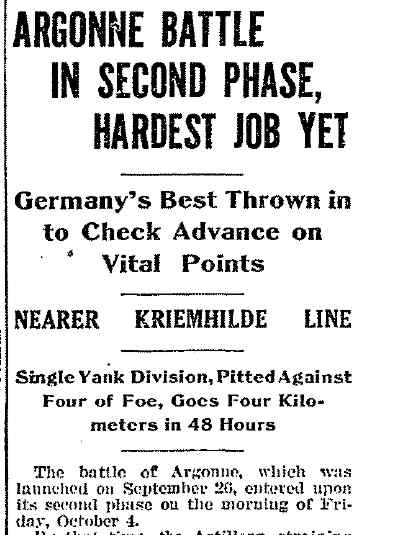 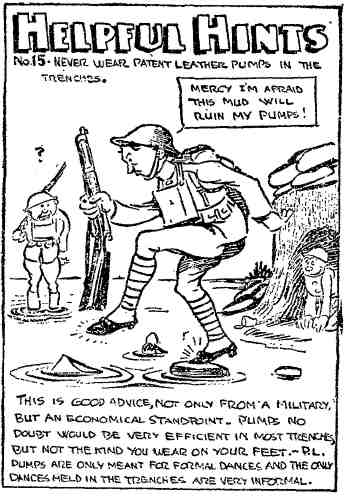 The Stars and Stripes
used illustrations to communicate ideas, especially those aimed at
justifying military goals and encouraging the troops' adherence to the war effort.
In the early issues, editors reprinted cartoons from some of the most
prominent U.S. newspapers and magazines, such as Life, New York World,
and the Philadelphia Press.
In many cases, the images selected by the editors would be considered
propaganda by today's standards. Cyrus LeRoy Baldridge's cartoon "Then
We Will Have Peace" showed the empty throne of the Kaiser with a corpse
in front of it (October 18, 1918, p. 4, col. 4 and November 15, 1918,
p. 4, col. 4); his drawing "The Girl We're All Fighting For" depicted a
soldier gesturing respectfully toward an image of the Statue of Liberty
on the horizon May 10, 1918.
<object width="480" height="385"><param name="movie" value="http://www.youtube.com/v/YKrIgFhzL80&hl=en_US&fs=1&color1=0x3a3a3a&color2=0x999999"></param><param name="allowFullScreen" value="true"></param><param name="allowscriptaccess" value="always"></param><embed src="http://www.youtube.com/v/YKrIgFhzL80&hl=en_US&fs=1&color1=0x3a3a3a&color2=0x999999" type="application/x-shockwave-flash" allowscriptaccess="always" allowfullscreen="true" width="480" height="385"></embed></object> |
|||||


|
